
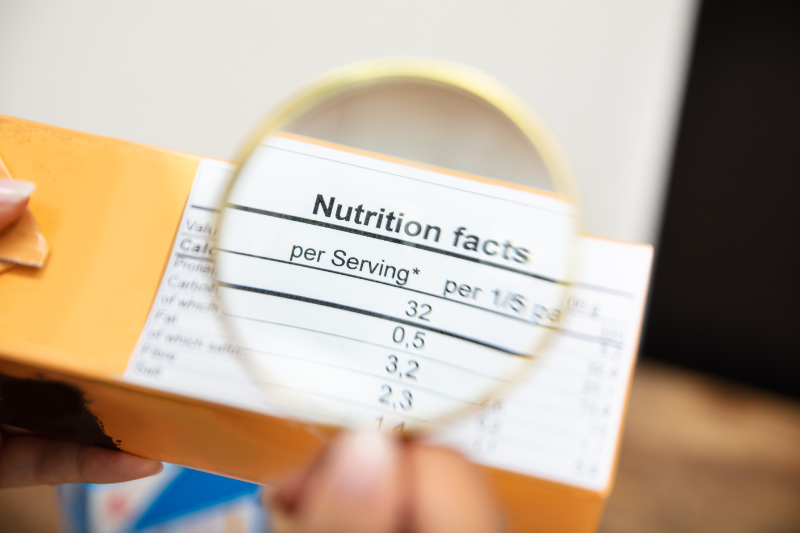
New research has suggested that the FDA's proposed front-of-package (FOP) labelling may not be the most effective choice for all Americans.
The study, published in the American Journal of Preventive Medicine, found that, while the proposed "Nutrition Info Box" showing levels of saturated fat, sodium and added sugar was found to work best for consumers who had higher nutrition literacy, it may not be the most effective choice for all Americans.
The findings from the study provide timely evidence on how FOP labels will help consumers identify healthier foods, which could ultimately support healthier eating.
Unhealthy diets are a leading risk factor for death worldwide.
In the US, diet-related diseases account for more than $50bn in annual healthcare costs.
Despite the well-established link between diet and health, the average quality of the US diet remains poor.
To combat this, in January 2025, the FDA proposed mandating Nutrition Info FOP labels, which would indicate whether packaged foods are low, medium, or high in saturated fat, sodium and added sugars.
"The FDA’s internal research suggests the ’Nutrition Info Box’ label improves consumer understanding more than other label designs and they hope it will help consumers quickly and easily identify healthier foods," said the first author of this study, Dr Yuru Huang, University of Tennessee Health Science Center.
"We were interested in whether this label had different effects for people in different subgroups."
To inform the FDA’s label selection in finalising the proposed rule, investigators conducted an online randomised trial with more than 5000 participants who were their household’s primary grocery shoppers across the US.
These were consumers with varying levels of nutrition literacy and from different racial, ethnic, income, or education groups.
Participants were randomly assigned to view foods and beverages with one of six different types of labels shown, including a label similar to the FDA’s proposed Nutrition Info label, “spectrum” labels that rated foods from least to most healthy and other types of labels implemented internationally.
Participants were asked to look at two products side by side and determine which they thought was healthier to measure how well the labels help consumers understand which products are healthier.
Study results
Lead investigator Dr Anna H. Grummon, Stanford University School of Medicine, said: "For each of the labelling systems we measured the gap in understanding between people with higher and lower nutrition literacy — that is, how much better consumers with higher nutrition literacy were at identifying healthier products compared to consumers with lower nutrition literacy."
The researchers found that the nutrition literacy gap was largest when consumers viewed products with the Nutrition Info labels shown (about a 12-13 percentage point difference between groups) and smallest when the "spectrum" labels were shown (about a three percentage point difference), meaning those are easiest to understand for consumers of all literacy levels.
"We were surprised to find that the Nutrition Info labels worked so much better for consumers with higher nutrition literacy compared to lower nutrition literacy," added Dr Grummon.
Principal investigator of the grant funding this study, Dr Jason Block, Harvard Medical School, emphasised two important considerations for the FDA as it finalises its label design: "First, if the FDA requires a Nutrition Info label, they should ensure that they also provide extensive education to consumers with lower nutrition literacy about how to use it, to ensure that all consumers can benefit from this label."
"Second, the FDA might consider adopting a different design other than the Nutrition Info label that avoids widening gaps in consumers’ ability to identify healthier products."
Overall, all labels tested improved consumer understanding compared to the current status quo of voluntary (positive) or numeric labelling systems, supporting the FDA’s efforts to mandate the FOP label.
The investigators pointed out that improved understanding does not necessarily translate to healthier purchasing or consumption.
"In our previous research, we found that Nutrition Info labels did not lead consumers to choose healthier foods and beverages when grocery shopping, even though the labels helped consumers identify healthier products."
"In that study, the spectrum labels were the only labelling system to prompt healthier food purchases,” said Dr Grummon.
Dr Huang concluded: "FOP labels may be more effective at prompting behaviour change when they communicate a single, simple message and incorporate both positive and negative cues."
"Our results show that the label effects vary across nutrition literacy levels, which could help inform the FDA about potential disparities before finalising its label choice."


