
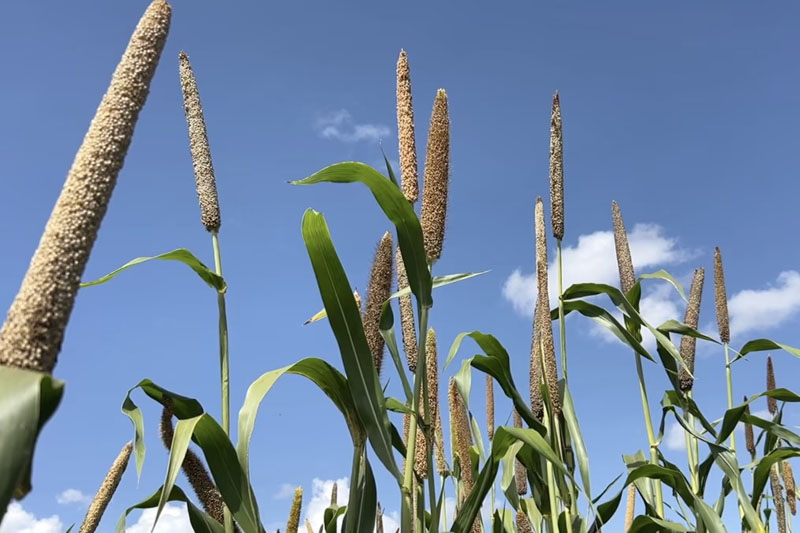
The International Crops Research Institute for the Semi-Arid Tropics (ICRISAT) has released the first biofortified pearl millet varieties for Zimbabwe and the Eastern and Southern Africa (ESA) region.
This represents a milestone in agricultural and nutrition science that promises to improve food security, combat malnutrition and build climate resilience for millions of smallholder farmers.
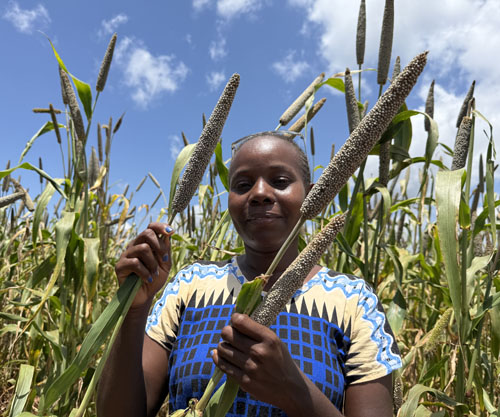
The two new varieties, Iniadi Composite 1501 and ICMP 177003, have naturally high levels of iron and zinc, addressing widespread micronutrient deficiencies that disproportionately affect children, women and low-income households.
These nutrients are critical for cognitive development, immune function and maternal health.
Developed through years of scientific breeding and testing, the new pearl millet types combine high micronutrient density with strong yields and resilience to drought, making them well-suited to Zimbabwe’s drylands and other semi-arid environments across ESA.
The release was enabled by the Grow Further-funded project: Improving Food, Nutritional and Income Security of Smallholder Farmers in Zimbabwe’s Arid and Semi-Arid Lands through High-Yielding Iron-Dense Pearl Millet Varieties.
Dr Himanshu Pathak, Director General of ICRISAT, highlighted biofortification as a vital tool in improving everyday nutrition without requiring supplements or major changes in diets.
He described the milestone as critical in narrowing gaps in food and nutrition security in rural communities.
Dr Rebbie Harawa, ICRISAT Global Research Program Director and Director for Africa, stressed the importance of collaboration and farmer-oriented research.
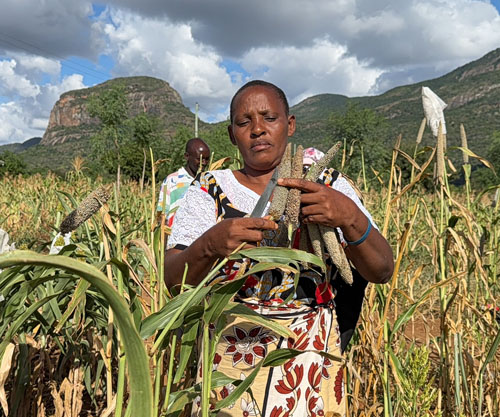
She said the new varieties would support stronger food systems, help boost household incomes and contribute to climate-resilient agriculture across Africa’s drylands.
Beyond better nutrition, the varieties offer economic opportunities, especially for women and youth involved in the production and processing of nutrient-dense grains.
To ensure wide adoption and lasting impact, the project is also investing in four key areas:
- strengthening seed systems to ensure reliable access to certified seeds across dryland areas
- providing nutrition education to help households use biofortified crops to improve diets
- delivering training in climate-smart agricultural practices
- supporting market development for these nutrient-rich grains and related products.
Dr Henry Ojulong, ICRISAT’s pearl millet breeder, described the breakthrough as a message of hope for families seeking nutritious food, farmers facing climate challenges and communities striving for better livelihoods.
The release of Iniadi Composite 1501 and ICMP 177003 marks a significant advance in Zimbabwe’s agricultural transformation and paves the way for broader regional adoption of nutrient-dense, climate-adapted crops across Eastern and Southern Africa.


