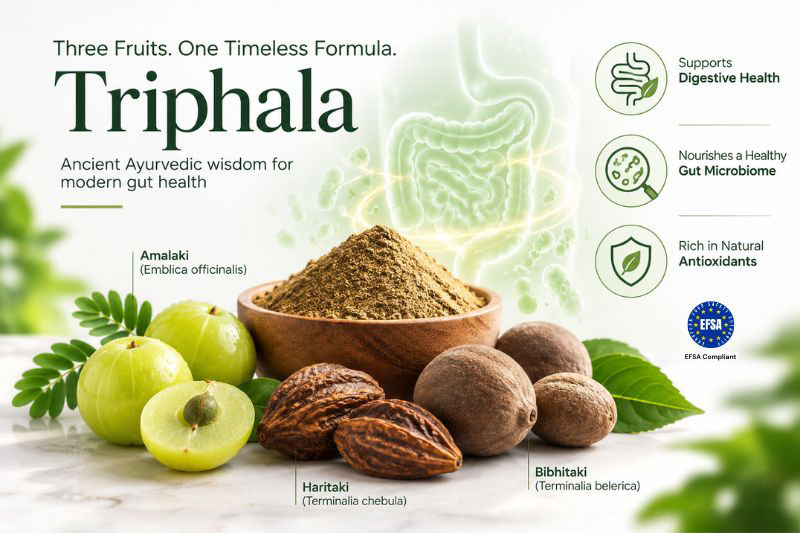
Unlike single-herb ingredients whose names point to a plant, Triphala's name points to a formula, a fixed combination of three fruits that has remained essentially unchanged across two millennia of Ayurvedic texts. The three constituents are:
- Amalaki (Phyllanthus emblica, a.k.a. Emblica officinalis), the same Indian gooseberry known in the West as Amla
- Bibhitaki (Terminalia belerica)
- Haritaki (Terminalia chebula)
Classical Ayurvedic literature, including the Sushruta Samhita, classifies Triphala among the rasayana formulations, preparations intended for long-term, restorative use rather than acute treatment. The combination was designed deliberately: each fruit is associated with one of the three doshas (Vata, Pitta, Kapha), so the formula was framed as balancing rather than single target.
Traditional use context
In traditional practice, Triphala's most consistent association is with digestive health and, more broadly, with detoxification and internal "cleansing." It was taken as a mild daily tonic rather than a targeted remedy, often as a powder steeped overnight in water. This every day, maintenance-oriented use is part of what distinguishes Triphala from more acute Ayurvedic interventions and is a useful narrative anchor for Western audiences unfamiliar with the rasayana concept: think of it less as medicine for a symptom and more as a long-standing dietary habit.
Proposed mechanism of action
Triphala's three fruits each contribute a distinct phytochemical profile, and the formulation's proposed effects are generally attributed to their combined polyphenol and tannin content:
- Gallic acid, ellagic acid, and chebulinic acid across the three fruits are associated with antioxidant activity, helping to neutralize reactive oxygen species
- Tannins are thought to contribute to the formula's traditional digestive associations, potentially through interactions with gut motility and the gut microbial environment
- Emerging in vitro and preclinical research has proposed that Triphala's polyphenols may influence gut microbiota composition, an area of active scientific interest given current global consumer focus on the gut-microbiome axis
Gut health is one of the fastest-growing categories in European nutraceuticals right now, and Triphala's three-fruit polyphenol profile fits that trend well, as long as we keep the messaging on digestive comfort and antioxidant support rather than anything that sounds like a cure or a cleanse. Since Triphala is a blend of three fruits rather than one single extract, buyers will likely also want to know how we ensure consistency batch to batch, which is worth having ready.
Triphala's appeal for formulators lies in its story as much as its chemistry: a single, unchanged three-fruit formula with a documented history stretching back over a thousand years, now finding new relevance in the gut-health category.
To learn more about K. Patel Phyto Extractions' botanical ingredient portfolio, visit phytoextractskp.com.