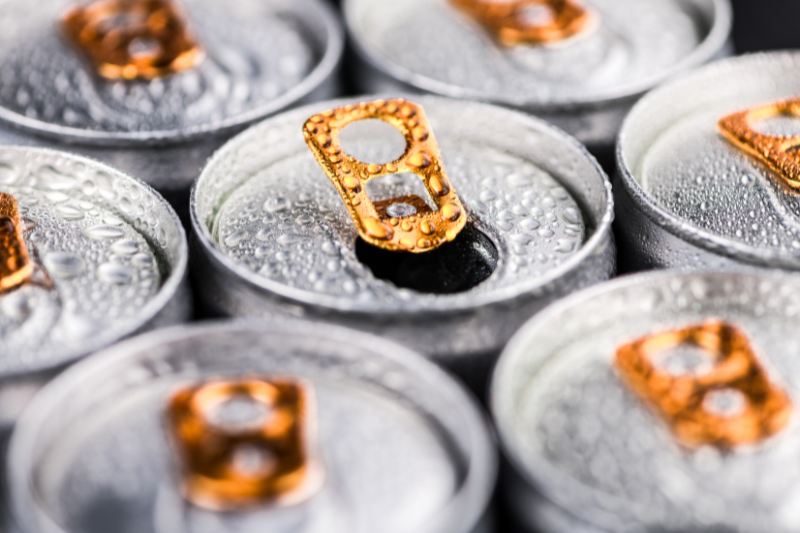
The functional beverage category is in the middle of a wellness-first reset, with low- and no-caffeine formats being among its fastest-moving segments. The global functional beverage market is projected to reach $314.04bn by 2035, with the reduced-caffeine portion alone expected to hit $18.5bn by 2027, up from $10.2bn in 2023.
Gen Z and Millennials are driving much of that momentum: 80% and 75%, respectively, now consume functional beverages regularly, prioritising mental clarity and sustainable sourcing above the stimulant-first energy that has dominated the last two decades.
The launches have been coming thick and fast to prove it. This month, InnoBev's non-caffeine energy brand AIN'T launched on the premise that "smart people need smart energy." Built around a patented formula of carob, guarana, ginkgo biloba and elderberry, clinical studies showed improved wakefulness, focus and productivity. 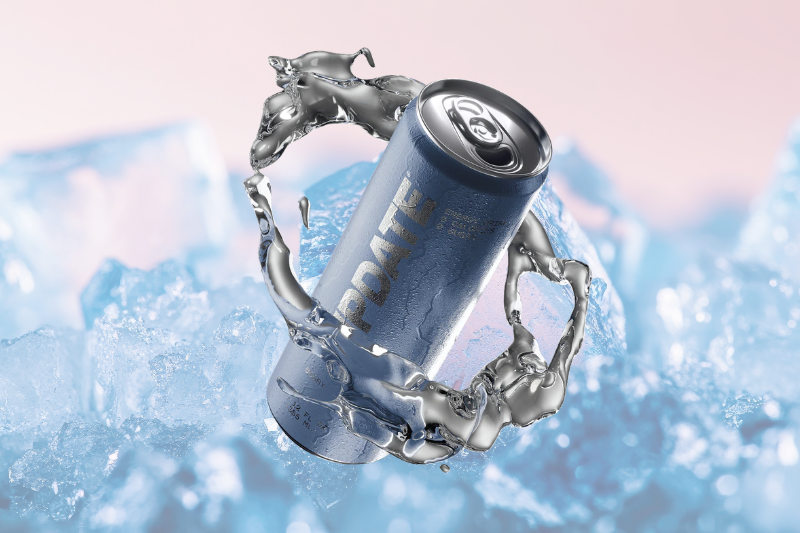 In the mainstream energy aisle, Kim Kardashian's functional drink brand UPDATE has just relaunched. Containing paraxanthine, a naturally occurring caffeine metabolite, the company claims that the product delivers smooth, steady energy without the “jitters, crashes or sleep disruption” of traditional energy drinks.
On the ingredient side, Akay Bioactives introduced CardaMind at the start of 2026, a black cardamom extract designed to support focus, accuracy and reaction time as consumers move beyond caffeine in search of sustained mental clarity. At the same time, OmniActive's Thai-ginger-derived enXtra has been used in clinical studies that show long-term gains (five hours) in alertness and attention within 30 minutes of a single dose. Together, the launches highlight a category no longer treating "caffeine-free" as a compromise, but as a formulation challenge worth solving properly.
The market’s growth isn't necessarily a rejection of caffeine, but rather a demand for something that does the same job differently. Brands and ingredient suppliers are now competing to prove their alternatives can deliver a real cognitive boost without the side-effects that put so many drinkers off their next cup — or can.
A symptom rather than a solution
For Carly Carnelli, MPH, Licensed RD and Medical Education Specialist at Thorne, the shift reflects a more fundamental change in how people think about fatigue itself. "Caffeine can also be a band-aid to brain fog when really the solution might require better, more consistent fuelling depending on what's causing it," she says.
Now, consumers want to figure that information out rather than mask a symptom with an extra cup of coffee.
 Elena García, Scientific Product & Communication Manager at Nektium, points to the scale of the problem that caffeine has created. According to Nektium research, globally, 47% of caffeine users say they are trying to reduce their intake or quit entirely, she notes, citing side-effects including "sleeplessness, jitters, nervousness and crashes" as well as the desensitisation that pushes users toward higher doses.
At the same time, consumers still want to boost their mental performance... that means there's a growing demand for smarter energy solutions that can still improve focus and cognitive processing.
The ingredients doing the heavy lifting
Both companies have ingredient stories that illustrate how suppliers can answer that demand. Nektium's mango leaf extract Zynamite works by inhibiting COMT. "By blocking COMT, Zynamite allows higher levels of dopamine, adrenaline and noradrenaline to remain in the brain," García explains.
The mechanism, she says, drives measurable gains in attention, working memory and reaction time without relying on a conventional stimulant mechanism.
Nektium also had to solve a formulation problem before Zynamite could reach beverages at all: mangiferin's naturally low water solubility. Proprietary processing, however, has since made the ingredient water-soluble with a mild taste profile, opening it up to formats such as energy drinks, herbal teas and powdered coffee alternatives.
At Thorne, Carnelli points to sageXtra, a caffeine-free sage extract manufactured by Stratum Nutrition, as the current standout. "sageXtra is the closest ingredient I've seen to matching the quick onset and alertness that caffeine provides while avoiding jitters and crashes," she says.
For longer-horizon support, she also names creatine for its role in ATP production and magnesium L-threonate for foundational cognitive and daytime energy support.
Both answers echo a theme running through the wider market briefing on functional beverages: the sector's fastest-growing subcategory is nootropic-driven focus, built on ingredients such as Lion's Mane, L-theanine and citicoline, which are typically stacked rather than used to chase a single caffeine-like hit.
Onset, evidence and the claims gap
Matching caffeine's near-instant, universally felt onset remains the hardest formulation problem to solve. Carnelli is candid that most alternatives shouldn't try to replicate caffeine's "sharp jolt" at all: "Low/no-caffeine formulas should strike a balance between effective, yet smooth support rather than duplicate it.”
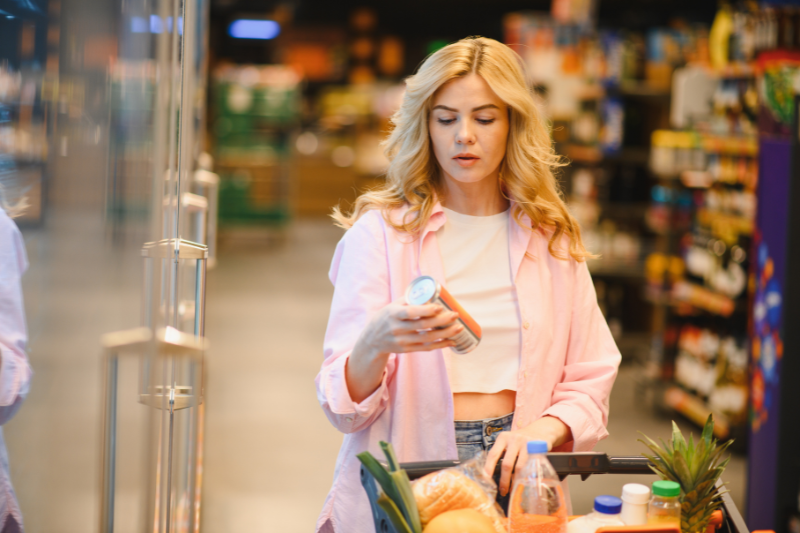 That distinction matters for the claims brands can legally make. "Caffeine has the deepest, most repeatable and reputable evidence base for fast-perceived alertness and performance," Carnelli notes, adding that the evidence for the newer entrants to the market is "a bit more variable and doesn't come close to matching caffeine's."
Her advice to formulators is