

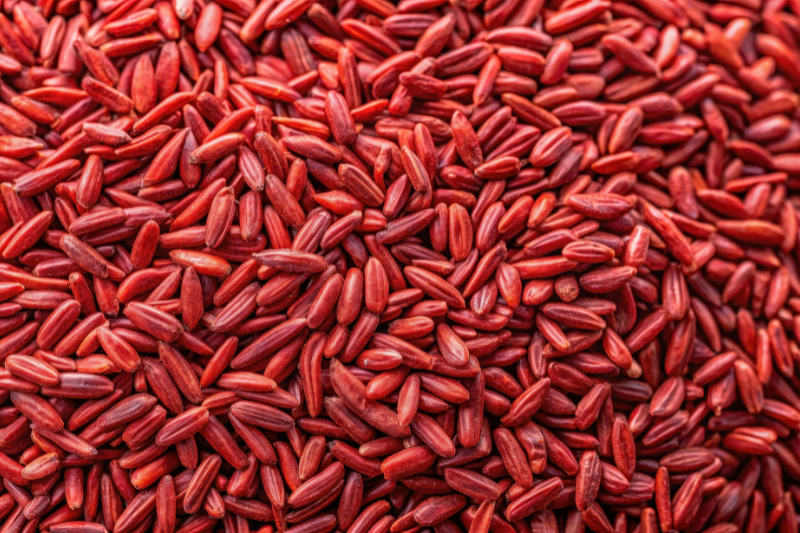
With the regulations around Monacolin K undergoing a change, ProBiotix Health is "challenging the industry" to consider what the next generation of cholesterol and cardiometabolic health products can deliver.
The European Union is moving toward a total ban on monacolins from red yeast rice in foods and dietary supplements.
Brands have historically relied on the ingredient in cholesterol-supporting products, but instead of simply replacing Monacolin K with another established ingredient, ProBiotix Health says they now have an opportunity to innovate and reformulate.
The company will exhibit at this year's CPHI show in Milan, held from 6-8 October, where it will encourage visitors to rethink the science, positioning and long-term strategy behind their cholesterol products.
The ProBiotix team will be at stand 16C80, Hall 16.
“The question should not simply be what replaces Monacolin K,” said Cellan Davies, Head of Marketing at ProBiotix Health.
"It should be ‘what should the next generation of cholesterol products now deliver?’"
If brands simply move from one established ingredient to another, we risk recreating the same category with a different ingredient. Reformulation allows us to build something better.
As the cholesterol category evolves, brands will also have to rethink biomarkers and consider wider cardiometabolic health when formulating products.
ProBiotix said future cholesterol ingredients should therefore be assessed against four key criteria: regulatory confidence, clinical proof, true differentiation and future-ready formulations.
“Efficacy remains essential, but it is no longer enough on its own," Davies added.
Brands should be looking for ingredients with robust human evidence, a clearly understood mechanism, a strong safety and regulatory profile and genuine differentiation that brands can build a proposition around.
"Those are the ingredients that are better positioned for where the category is going next."
A different route to cardiometabolic innovation
ProBiotix highlighted the relationship between the gut, microbiome, the gut-heart axis and cardiometabolic health as an area of particular interest for product innovation.
It said brands can explore microbiome science to "create new mechanisms, new product stories and broader cardiometabolic propositions" rather than relying on the "same established ingredient categories."
It cited LPLDL as an example of how this approach can translate into a commercial product.
LPLDL was intentionally chosen from more than 4000 microbial candidates due to its high bile salt hydrolase activity, specifically focusing on cardiometabolic health.
It operates through a well-defined microbiome mechanism that supports cholesterol metabolism via the gut-liver axis.
Numerous independent human intervention studies have demonstrated its effectiveness, showing measurable impacts on key cardiometabolic biomarkers, including total cholesterol, LDL cholesterol, HDL cholesterol and apolipoprotein B (ApoB).
But rather than just adding a probiotic to a cholesterol formula, ProBiotix said that the opportunity is to "build a genuinely differentiated cardiovascular or cardiometabolic proposition around microbiome science."
“Microbiome science gives brands a completely different route into cardiovascular health,” Davies said.
Rather than competing around the same established ingredient stories, there is an opportunity to build products around new mechanisms, stronger scientific differentiation and the wider relationship between the gut and cardiometabolic health.
"That is where we believe some of the most interesting innovation in this category will come from.”


