

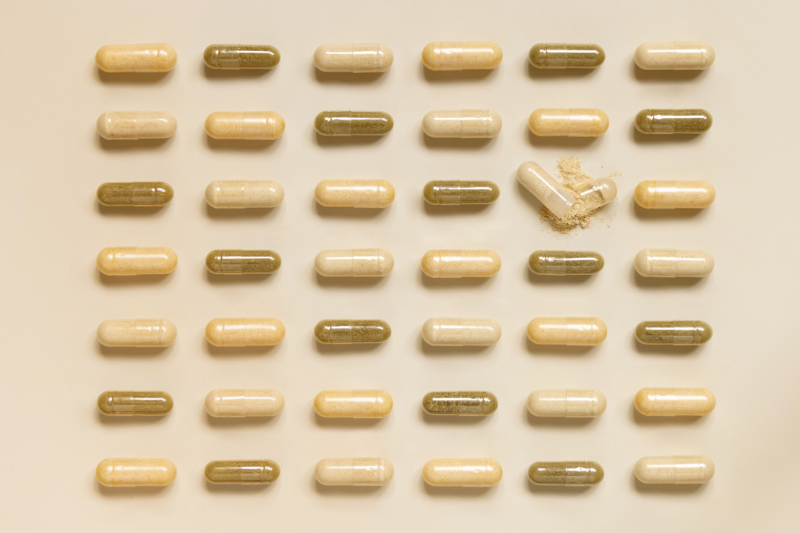
Enteric capsules are a mainstay for protecting acid-sensitive actives and delaying release until the small intestine, but most evidence for their performance has come from static, one-size-fits-all dissolution tests that don't capture what actually happens after a meal.
A new study, published in the European Journal of Pharmaceutics and Biopharmaceutics by researchers from Bioneer A/S, the University of Copenhagen and Lonza Capsugel, set out to close that gap for Capsugel's Enprotect capsules.
The team used Bioneer's Dynamic Gastrointestinal Model (DGM), a system designed to mimic the stomach's motility, pH shifts, digestive secretions and emptying patterns.
Enprotect capsules, made using a bi-layered manufacturing process that avoids post-fill coating, heat and solvents, were filled with caffeine as a model compound and tested under fasted conditions, after a light meal (around 500 kcal) and after an FDA high-fat meal (around 900 kcal).
No premature release, even after a high-fat meal
Across all three scenarios, the capsules held together throughout gastric transit, with no caffeine detected in stomach samples — meaning contents were released only once the capsules reached the intestinal compartment.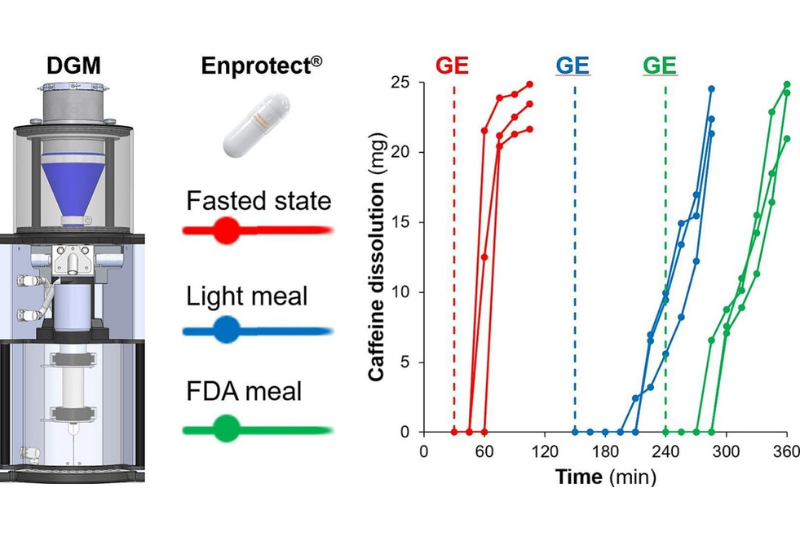
Gastric residence times stretched from roughly 29 minutes fasted to 147 minutes after the light meal and 243 minutes after the high-fat meal, yet structural integrity held throughout.
Notably, the high-fat meal kept gastric pH elevated for longer than usual, a condition that can challenge enteric coatings reliant on acidic triggers.
The authors suggested that the capsules' floating behaviour and the stomach's localised "acid pocket" may have helped preserve integrity despite the less acidic surroundings.
Model predictions line up with human data
The DGM results also tracked closely with previously published human MRI and salivary-tracer data for gastric residence and disintegration timing in fasted and light-meal states, lending weight to the model as a predictive tool for oral dosage form behaviour beyond conventional dissolution testing.
For formulators working with acid-sensitive actives, the findings offer fresh reassurance that Enprotect's gastro-resistance holds up under realistic, food-varied conditions rather than just idealised lab ones.


