
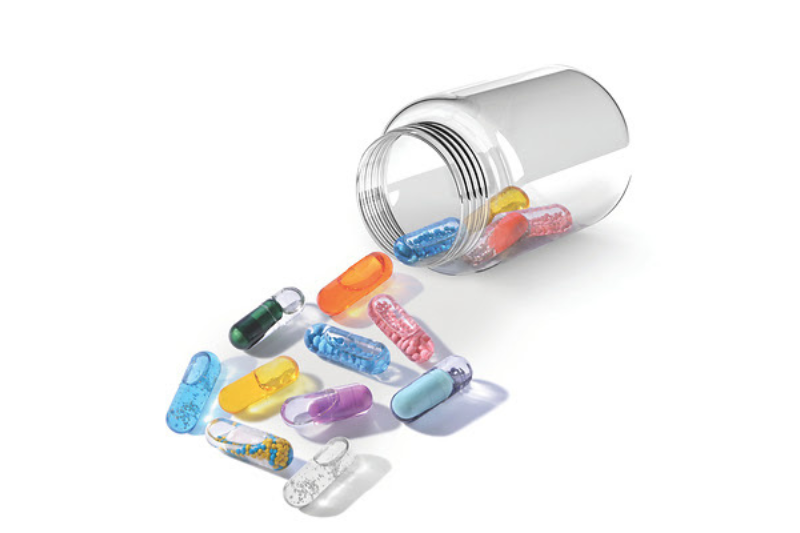
Lonza Capsugel has released new peer-reviewed research suggesting its Licaps DUOCAP capsule-in-capsule technology can improve the protection and targeted delivery of acid-sensitive digestive enzymes in the gastrointestinal (GI) tract.
The study, published in Pharmaceutics and conducted with Belgian gastrointestinal research specialist ProDigest, investigated how different capsule polymers and formulations performed under simulated fed and fasted digestive conditions.
Researchers used the Simulator of the Human Intestinal Microbial Ecosystem (SHIME) in vitro model to compare five capsule formulations, including two single-capsule formats and three Licaps DUOCAP configurations.
The capsules contained caffeine as a marker of dissolution, alongside pancreatin, an acid-sensitive digestive enzyme.
Researchers tracked capsule dissolution, ingredient protection and enzyme activity throughout the upper GI tract, with particular attention to the upper small intestine.
The results
When administered under fed conditions, the Licaps DUOCAP capsule-in-capsule formulations demonstrated higher levels of protection and more targeted release.
Caffeine was released towards the end of the duodenum and/or jejunum, while butyrate recovery in the upper small intestine ranged from 53% to 87%.
Enzyme activity was also up to four times higher in the upper small intestine than with standard immediate-release capsules.
By comparison, the immediate-release single capsule released a substantial proportion of its contents in the stomach.
Butyrate recovery in the upper small intestine was only 16-21%, suggesting that exposure to gastric conditions reduced the amount of active enzyme reaching the intended site.
According to Dr Elnaz Karimian Azari, Senior Manager of R&D at Lonza Capsugel and lead author of the study, the findings highlight the role of capsule selection in determining the performance of nutraceutical formulations.
"This study further reinforces the robustness and reliability of our Licaps DUOCAP capsule-in-capsule technology, providing independent, peer-reviewed validation of its ability to deliver sensitive ingredients to targeted regions of the gastrointestinal tract."
While this work focused on release in the upper small intestine, it builds on a growing body of evidence demonstrating that Licaps DUOCAP capsules can protect and transport ingredients [such as] live probiotics all the way to the colon, where they are needed to achieve optimal performance.
"It also highlights just how important capsule selection is to the success and effectiveness of nutraceutical products — and why delivery really does matter."
The findings could have implications for developers working on digestive health products and other nutraceuticals containing acid-sensitive or site-specific ingredients, where maintaining ingredient stability through the stomach is critical to achieving the desired biological effect.
Lonza Capsugel will showcase its capsule technologies at CPHI Korea 2026 in Seoul from 25-27 August.


