


A study of professional footballers found increases in the bacteria Blautia and decreases in Alistipes after six months of turmeric shot consumption, although researchers stress that larger studies are needed to confirm the findings.
A six-month pilot study identified changes in specific gut bacteria associated with daily turmeric shot consumption, providing further insight into the potential relationship between turmeric and the gut microbiome.
The study
Published in Performance Nutrition, the research followed 11 male professional footballers, eight of whom consumed two 60 ml servings of The Turmeric Co.'s Raw Turmeric Original shots daily, while three participants formed a non-consuming control group.
Faecal samples were collected at baseline, after two weeks and following six months of consumption.
Exploratory analyses identified increases in the bacterial genus Blautia and decreases in Alistipes among those consuming the turmeric beverage compared with controls.
At the species level, the researchers observed increases in Blautia wexlerae and Blautia obeum, alongside decreases in Alistipes putredinis and Alistipes onderdonkii.
Previous research has associated B. wexlerae with metabolic regulation, including inverse correlations with obesity and type 2 diabetes in human populations.
Animal studies have also identified potential anti-inflammatory effects.
However, these associations do not establish that increasing its abundance through dietary supplementation delivers health benefits.
The researchers emphasised that the findings were hypothesis-generating rather than evidence of improved gut health or immunity.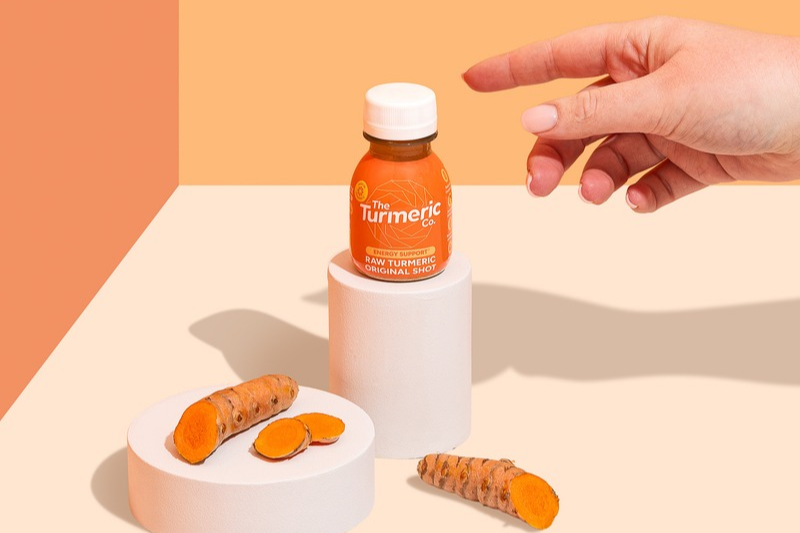
There were no robust differences in overall microbial community composition between the intervention and control groups, while microbiome diversity showed a directional tendency towards reduction among turmeric consumers.
The findings also warrant caution given the small sample size, self-selected intervention groups and limited dietary monitoring.
Furthermore, the study investigated a finished beverage containing raw turmeric, watermelon, pineapple, lemon and black pepper, meaning the observed changes cannot be attributed to turmeric alone.
The authors concluded that larger, controlled studies are needed to determine whether the observed bacterial changes are reproducible and linked to measurable physiological outcomes.


