
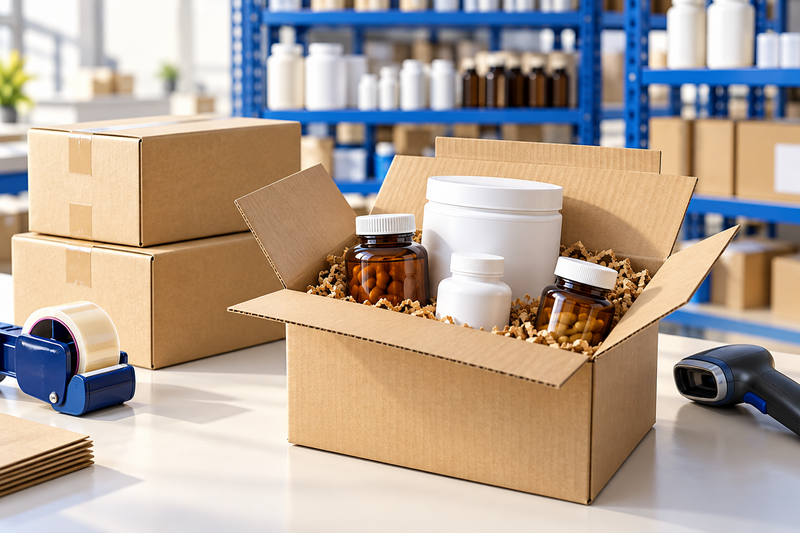
Many supplement brands choose a 3PL by the price per order. That number hides the real margin killers: refused COD parcels, expired batches, storage that costs more than planned and fees nobody mentioned.
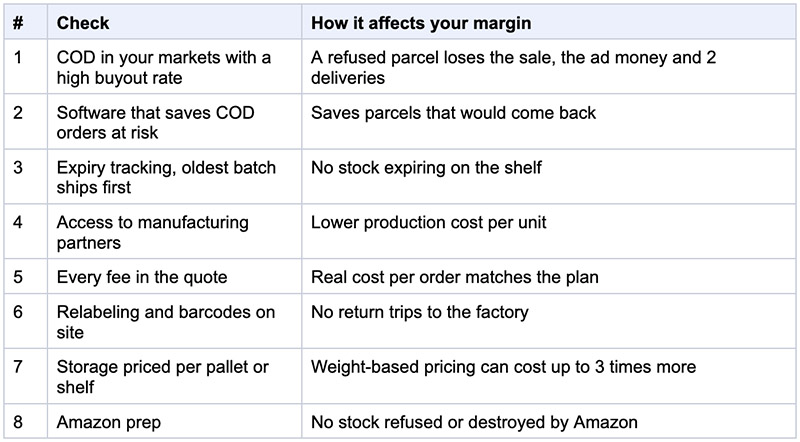
This guide gives supplement brands that sell in the EU, often with COD and paid ads, 8 checks to make before signing with a 3PL, ranked by impact on margin, each with the math and the questions to ask.
8 checks for a supplement 3PL, ranked by margin impact
Table 1. 8 checks ranked by impact on margin
1. COD buyout rate in your markets
Why it ranks #1: it touches every COD order, and each refused parcel loses the full sale.
With cash on delivery (COD), the buyer pays when the parcel arrives. Many EU buyers expect this option, and for brands that pay for ads, it often decides whether a campaign earns money.
The key metric is the buyout rate: the share of COD orders that end with a payment. Each refused parcel costs 2 deliveries plus the ad money that brought the order.
Example: 1,000 COD orders in Romania at €105. At 70% buyout, revenue is €73,500. At 80%, it is €84,000: €10,500 more from the same ads and stock.
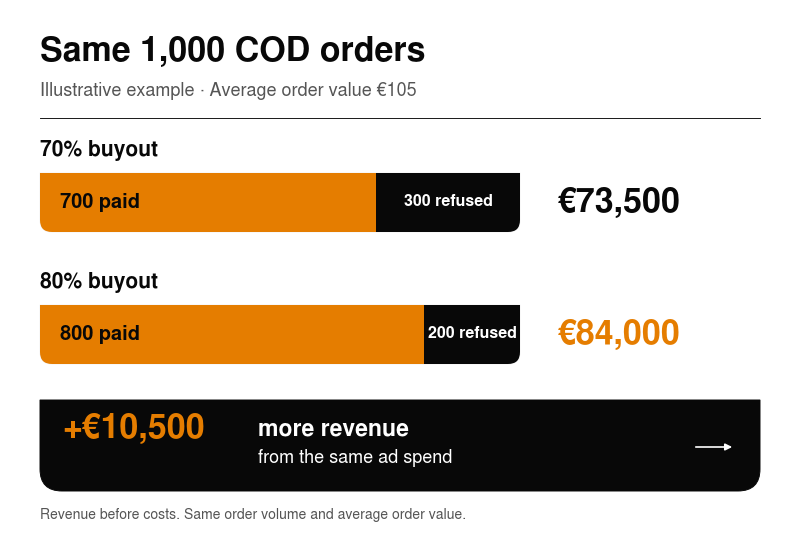
Figure 1. A 10-point difference in buyout gives €10,500 more revenue.
A 10-point gap is realistic, because buyout depends on how the provider handles delivery problems. For example, WAPI works with supplement fulfillment in 19 COD markets in Europe and Mexico and sends real-time alerts when a courier reports a problem. The company says these alerts change buyout by +10-15%. Table 2 shows its typical rates.
Table 2. Typical COD buyout rates by market
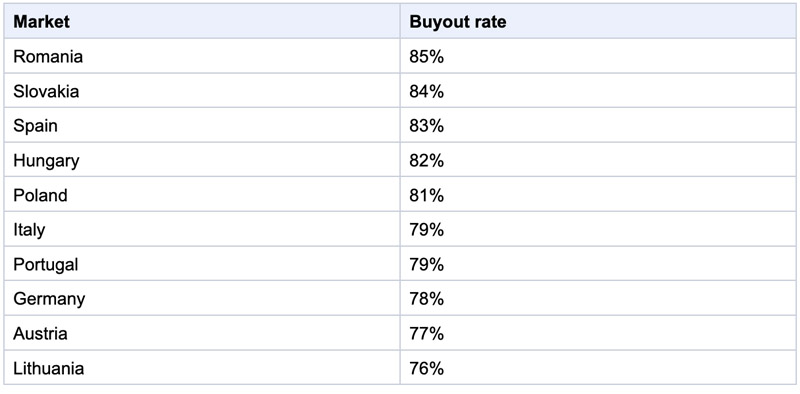
Typical, not guaranteed: rates depend on the product and offer.
Ask each provider:
- Which COD markets match my sales plan?
- What buyout rate do you reach in each, month by month?
- How many days pass between delivery and my payout?
- Weekly payout is best. Some providers wait for each carrier to pay first, which can delay your money for weeks.
2. Software that saves COD orders
Why it ranks #2: it moves the same number as check 1. Each saved parcel is a sale you already paid ads for.
Basic software shows where an order is. For COD supplements, it should also act when a parcel is at risk:
- Fast second delivery attempts. Supplements are often an impulse buy, and each day after a failed delivery gives the buyer time to change their mind. Example: of 1,000 monthly COD orders, 80 fail at first delivery. Saving half of them instead of a quarter keeps 20 more orders, or €2,100 a month.
- Alerts before holiday closures. Demand jumps after New Year for about 6 weeks, and January 6 is a holiday in several EU countries. An early alert lets you restock while carriers still work.
Example: at 300 orders a week, one January week without stock costs €31,500. - Parcels near the pickup deadline. Uncollected parcels go back after a set time, with less shelf life. If your team sees them in time, it can remind the buyer.
- Refusal data by country and period. When you see where refusals grow, you can change the targeting of the next campaign.
Example: refusals in one country grow from 15% to 25%. On 1,000 orders at €12 in ads each, that is €1,200 in lost ads, plus 200 deliveries.
In a demo, ask to see what the system did with a real problem parcel.
3. Expiry tracking
Why it ranks #3: an expired batch is a 100% loss. It touches every batch but happens less often than a refusal.
The warehouse must ship the batch that expires first. This works only if batch numbers and expiry dates go into the system at receiving. The same data shows at once which orders to check in a recall.
Example: one batch expires in March, another in September. If September ships first, the March batch expires on the shelf, and the brand may also pay to destroy it.
Some warehouses charge extra for batch tracking. Ask if it is in your quote.
4. Lower production cost through partners
Why it ranks #4: a lower production cost raises margin on every unit, but the effect depends on the quotes you get.
A fulfillment provider does not make your products, but some can connect you with manufacturing partners. Example: if production is 20% of your sale price and a partner makes the same product 10% cheaper, you keep 2% more of every sale.
Ask for a partner quote and compare it with your current factory on cost per unit, minimum order and production time.
5. Full cost per order
Why it ranks #5: hidden fees touch every invoice, and every extra fee cuts profit you already planned.
Ask for a quote with each fee on its own line, in the order your stock moves: inbound, storage, outbound, then COD and returns.
Example: the first invoice adds COD, returns and labeling fees that were not in the quote. Together they take 3% of order value, or €3,150 a month on 1,000 orders of €105.
A monthly minimum is fine if it is in the quote. A fee that first appears on the invoice is not.
6. Relabeling for each market
Why it ranks #6: the loss can be large, but only when you enter a new market or stock arrives without barcodes.
EU food rules require labels that buyers can read easily, which in most countries means the official language. Stock labeled in Spanish needs new labels for Italy. A warehouse that relabels makes it ready within days. Otherwise, the stock goes back to the factory: you pay transport both ways and lose weeks of sales and shelf life.
Missing barcodes cause the same delay for new products, test batches and promo bundles. A provider that applies barcodes at receiving makes them sellable in days, not weeks.
7. Storage pricing for heavy products
Why it ranks #7: storage is usually a small cost, but weight-based pricing can make it up to 3 times higher for heavy products.
Example: 10 pallets of capsules and 10 pallets of liquids in glass bottles, which weigh 3 times as much. Priced by space, the brand pays for 20 pallets. Priced by weight, it pays as if it stored 40, so the bill doubles.
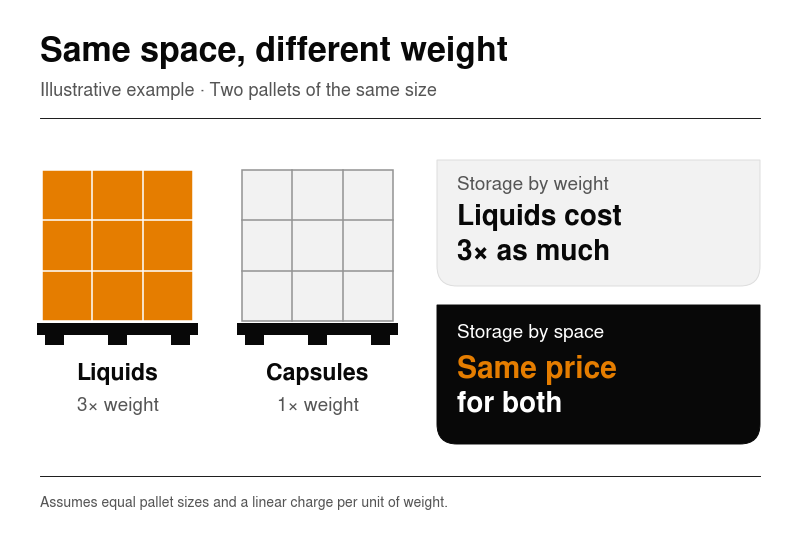
Figure 2. Storage priced by weight makes heavy products more expensive.
Ask for storage prices per pallet or shelf, in writing, and calculate the cost from your carton sizes.
8. Stock for Amazon
Why it ranks #8: it matters only for Amazon sellers, but one bad shipment can cost all the stock in it.
Amazon's rules for products with an expiry date:
- At arrival, shelf life must cover the buyer's use plus 90 days. A 60-serving bottle needs at least 150 days.
- Products leave sale 50 days before expiry, so that bottle sells for only 100 days.
- Every product and box needs an expiry date, and each box can hold only 1 expiry date per product.
Stock that breaks these rules can be refused or destroyed at the seller's cost. A provider that prepares Amazon stock should check every date before shipping.
Before you sign: compare the full 3PL cost
Spend most of your time on the top 3 checks. Then ask each provider for 3 documents:
A line-by-line quote, with the monthly minimum included.
Buyout rates for each of your target markets.
Supplement case studies with real numbers: buyout by market, stock lost to expiry and the real cost per order.
If all the cases come from fashion or electronics, the provider may know little about shelf life and COD refusals.
The best supplement 3PL is not the one with the lowest price per order. It is the one that can show higher buyout, less expired stock and clear costs with real numbers before you sign.


