

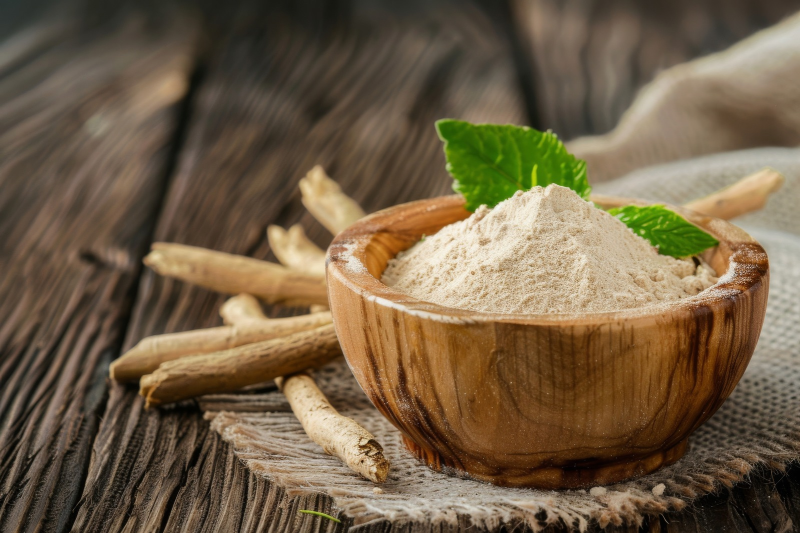
The Ashwagandha Standards Alliance (ASA) has added six members to its collaborative initiative to improve quality standards for ashwagandha supplements and ingredients, as regulatory scrutiny and scientific research intensify around the botanical.
The new members are the following:
- Alkemist Labs
- Botanic Healthcare
- Flora Research Laboratories
- Natural Foundation Supplements
- Nootropics Depot
- and Unicorn Natural Products.
They join founding members Sabinsa, Cepham, Arjuna Natural USA, Kerry, Botanical Liaisons and NaturPro Scientific, bringing together ingredient manufacturers, analytical laboratories, supplement brands and quality specialists.
The ASA is also advancing a draft technical standards framework for ashwagandha, with a focus on product identity, analytical methods, ingredient composition and accurate labelling.
“Ashwagandha doesn't have a science problem. It has a consistency problem,” said Blake Ebersole, co-founder of the ASA.
Our new members are committed to guiding the industry on strong analytical and labelling standards for ashwagandha, as we work to build out technical standards that will guide the industry forward.
Ashwagandha quality under regulatory scrutiny
The initiative comes amid evolving regulation in key markets.
In April 2026, India's Food Safety and Standards Authority of India (FSSAI) directed food businesses not to use ashwagandha leaves, while the Ministry of AYUSH issued a related directive favouring roots and root extracts in AYUSH products.
Several companies challenged the measures and the Karnataka High Court subsequently granted interim relief to petitioning firms, with the ASA supporting the challenge.
Meanwhile, the Netherlands has been reassessing its approach to ashwagandha following a 2024 risk assessment by the National Institute for Public Health and the Environment (RIVM).
According to the ASA, the Dutch government has indicated it would likely remove a proposed broad prohibition while it considers additional evidence in a new assessment of ashwagandha root.
These developments underline the challenges of establishing consistent quality requirements for botanical ingredients across different regulatory jurisdictions.
Draft standards target analytical variability
A central focus of the ASA's work is the reliability of analytical methods used to measure withanolides, a group of naturally occurring compounds in ashwagandha.
Although compendial methods and in-house validated approaches are available, the alliance says some suppliers continue to use methods that are not sufficiently reproducible or fit for purpose.
This can lead to inflated strength claims, particularly when products are marketed according to their percentage of total withanolides.
The ASA argues that buyers should be able to establish which withanolides have been measured and which analytical method was used, rather than relying on a percentage stated on a certificate of analysis.
Research from the University of Mississippi comparing 25 commercial ashwagandha products using British Pharmacopoeia and United States Pharmacopeia (USP)-based approaches has also highlighted chemical and analytical variation across the market.
Trish Flaster, Executive Director of Botanical Liaisons, said testing should verify product quality and composition rather than create the appearance of quality.
Ashwagandha is the immediate case study, but these issues go far beyond one herb. Our responsibility is to understand these plants, test them properly and leave the industry stronger than we found it.
The ASA said that it plans to continue expanding its membership, completing its technical standards work and supporting science-based regulatory dialogue internationally.
It added that more consistent analytical requirements could help protect responsible suppliers and brands investing in validated methods, appropriate specifications and transparent labelling.
Featured companies

- Companies:
- Sabinsa
- Cepham Inc
- Botanical Liaisons
- Botanic Healthcare


