
Collagen, elastin and hyaluronic acid are important components of articular cartilage, the shock absorber of the joint.10,21,22
Collagen is responsible for stabilising cartilage; elastin contributes to the tissue's resilience and shock absorption, whereas hyaluronic acid — in addition to being essential for maintaining the structure and integrity of cartilage — is the primary lubricant in synovial fluid surrounding articular cartilage in joints.10,21,22

Pycnogenol’s abilities to increase the synthesis of hyaluronic acid and collagen, and to protect elastin and collagen from being degraded, are backed by a strong increase in the concentration of Pycnogenol’s metabolites and components in the synovial fluid of osteoarthritis patients.23,24
In this way, the active ingredients of Pycnogenol act directly where they are needed to exert their anti-inflammatory effects.
This explains how Pycnogenol restores the health of damaged joints.
In most cases, joint discomfort is caused by damage to the articular cartilage. In a clinical study with Pycnogenol, proinflammatory and degradation markers in the synovial fluid were significantly lower after 3 weeks of supplementation than in control subjects.24
Additionally, four clinical studies confirmed Pycnogenol’s beneficial effects on joint health, showing reduced discomfort and stiffness and improved physical function … as well as the reduced need for analgesic medication in patients with osteoarthritis.25–28
Osteoarthritis is the most common joint disease worldwide and a major cause of disability, especially in older people; it affects 10–18% of people older than 60.29
Osteoarthritis is a condition in which joint cartilage and the underlying bones are degraded mechanically and by certain enzymes. This can activate inflammation processes, which further accelerate the degradation of the joint cartilage.29
A pilot, randomised, double-blind and placebo-controlled study in patients with articular cartilage damage showed that Pycnogenol intake for 3 months resulted in improvements in joint health, with a significant reduction in self-reported discomfort of 43%, stiffness by 35% and physical function by 52% (compared with a placebo).25
In another double-blind, placebo-controlled and randomised study, 100 patients with mild-to-moderate knee osteoarthritis were supplemented with Pycnogenol for 3 months.26
The results of this study confirmed the previous findings of decreased discomfort (by 21.4%), reduction of stiffness in the knee (by 20%) and improved ability to perform daily activities (by 19.6%) when compared with placebo-controlled subjects.
After 6 weeks of Pycnogenol intake, stiffness in the knee was reduced by 40% compared with baseline and placebo data (Figure 4).
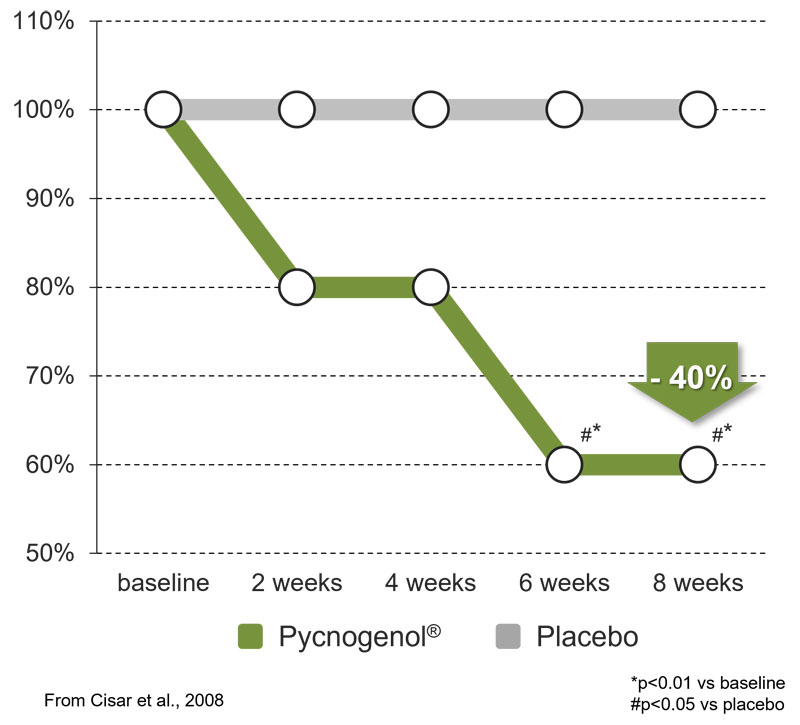
Figure 4: Pycnogenol reduces joint stiffness
Another 3-month study with 156 osteoarthritis patients showed a decrease in a global patient-reported score used to assess pain, stiffness and physical function in individuals with osteoarthritis by 56% with Pycnogenol (and by 9.6% in the control group).27
Additionally, after 3 months, the walking distance on a treadmill was prolonged by 130 m with Pycnogenol compared with controls (by 23 m) and the use of painkillers was reduced by 58% in the Pycnogenol group and by 1% in the control group.
In a study with 55 patients suffering from osteoarthritis, the level of an inflammatory marker (CRP) was significantly decreased by 72%; in addition, oxidative stress levels decreased by 30%.28
These results confirm previous findings that the regular intake of Pycnogenol has been shown to exert anti-inflammatory effects by inhibiting the NF-κB pathway, a key regulator of inflammation.
Pycnogenol supplementation leads to a potent decrease in proinflammatory markers, such as CRP and COX-enzymes, as well as a decline in matrix metallopeptidases (MMP) enzymes that are also responsible for destroying cartilage in joints.6,7,17,18,24
A solution for dry eyes
Hyaluronic acid is also a natural part of the tear film; it stabilises and thickens the ocular lubricant.30 Hyaluronic acid is therefore used as a treatment in dry eye disease to support eye lubrication.
Pycnogenol increases hyaluronic acid generation within the body, which explains the beneficial effects of Pycnogenol on dry eyes shown in several studies.13,31,32
In a study with patients suffering from Sjögren’s disease — a chronic autoimmune disease with symptoms of mucosal and ocular dryness — the number of subjects needing topical eye dryness control was reduced by 31% (Figure 5).31
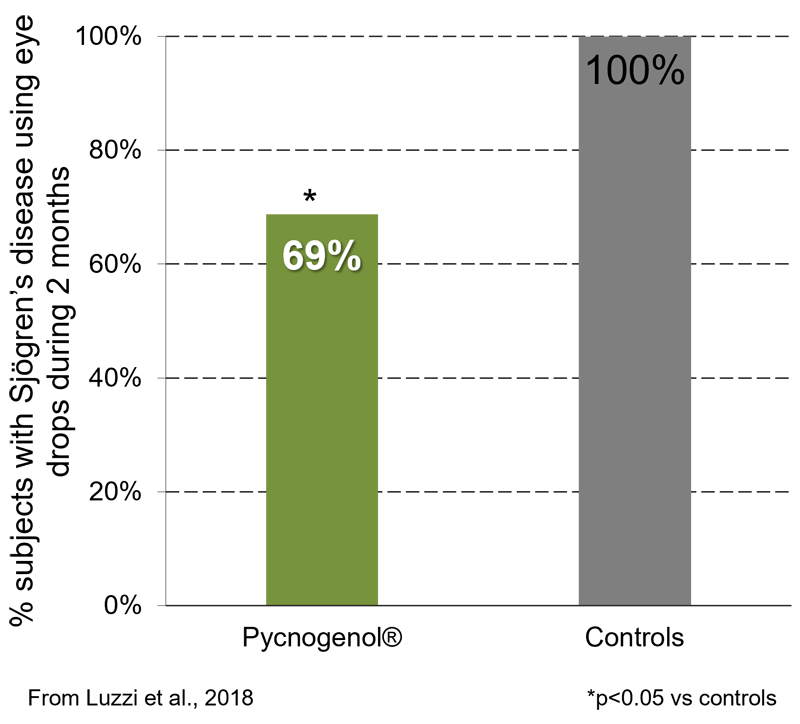
Figure 5: The effect of Pycnogenol on dry eyes in patients with Sjögren’s disease
A study involving patients with Behçet syndrome showed similar results; only 33% of the Pycnogenol patients experienced dry eyes after 4 weeks, whereas 88% of the control patients still suffered from dry eyes.32
A study investigating the effects of Pycnogenol on the side-effects of oncologic treatment showed a lower incidence of dry eyes (11.9%) compared with the control group (17.3%).13
Enhanced cognitive function
Interestingly, recent discoveries have shown a direct role for hyaluronic acid in the brain’s extracellular matrix in terms of regulating synapse formation and function.33
Pycnogenol has shown beneficial effects on cognitive function across different ages, from children with ADHD to older adults with mild cognitive dysfunction.34–38
The stimulating effect of Pycnogenol on hyaluronic acid synthase might partly explain these observations.5
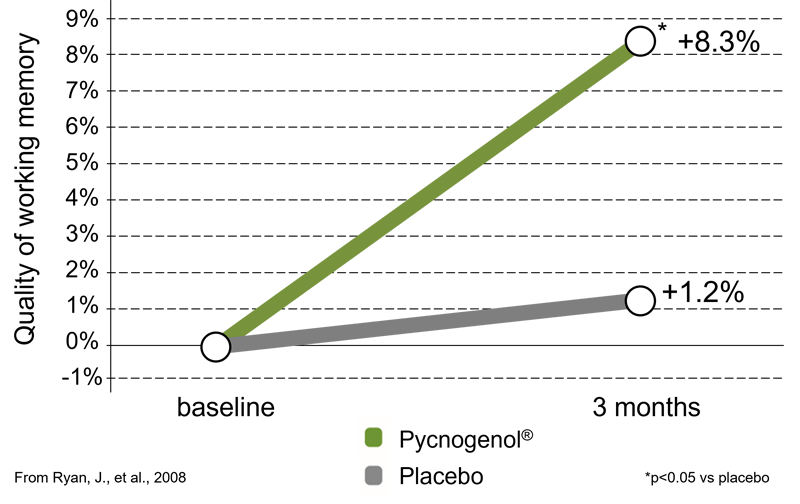
Figure 6: Pycnogenol has shown beneficial effects on cognitive function
Pycnogenol French maritime pine bark extract has shown interesting effects on components of the extracellular matrix.
By stimulating new collagen synthesis, increasing hyaluronic acid generation and inhibiting the activity of destructive enzymes, Pycnogenol contributes to skin health and beauty, joint health, eye health and wound healing — naturally and from within.
References
21. A.J.S. Fox, et al., Sports Health: A Multidisciplinary Approach 1(6), 461–468 (2009).
22. H. Trębacz, et al., Biomolecules 13(3), 574 (2023).
23. M. Mülek, et al., Nutrients 9(5), 443 (2017).
24. S. Jessberger, et al., BMC Complement. Altern. Med. 17(1), 537 (2017).
25. R. Farid, et al., Nutrition Research 27(11), 692–697 (2007).
26. P. Cisar, et al., Phytother. Res. 22(8), 1087–1092 (2008).
27. G. Belcaro, et al., Phytother. Res. 22(4), 518–523 (2008).
28. G. Belcaro, et al., Redox Rep. 13(6), 271–276 (2008).
29. S. Glyn-Jones, et al., The Lancet 386(9991), 376–387 (2015).
30. L. Hynnekleiv, et al., Acta Ophthalmologica 100(8), 844–860 (2022).
31. L. Luzzi, et al., Minerva Cardioangiol. 66(5), 543–546 (2018).
32. S. Hu, et al., Minerva Cardioangiol. 66(4), 386–390 (2018).
33. E. Wilson, et al., Scientific Reports 10(1), 16459 (2020).
34. A-S Weyns, et al., Journal of Functional Foods 97, 105246 (2022).
35. J. Ryan, et al., J. Psychopharmacol. 22(5), 553–562 (2008).
36. G. Belcaro, et al., J. Neurosurg. Sci. 59:437–446 (2015).
37. R. Luzzi, et al., Panminerva Medica 53(3), 75–82 (2011).
38. M. Hosoi, et al., J. Neurosurg. Sci. 62(3), 279–284 (2018).
Citations 1–10 can be found in Part I.